Ranthambore national park is one of the most celebrated tiger reserves of India with its own specific flora and fauna which attracts wildlife tourists from all over the world. When it comes to the flora and fauna of a reserve forest, it's good to start with the fauna first as this is what makes people to visit here often.
Fauna in Ranthambore Reserve Forest
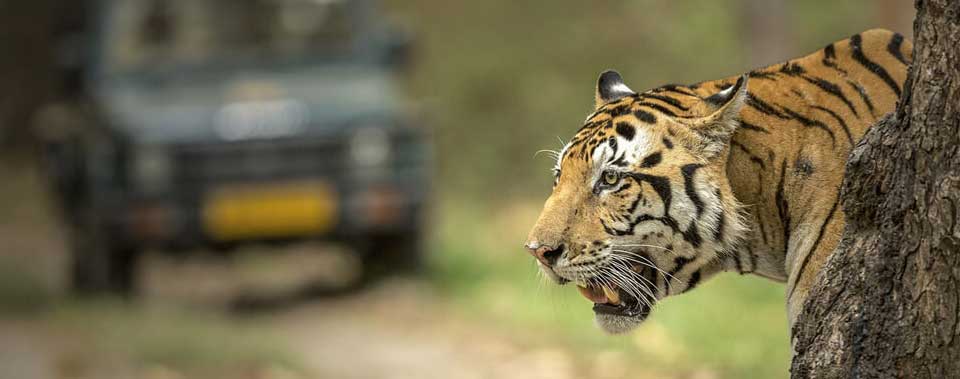
Obviously, the majestic Tiger is the prime and most coveted mammal of this reserve park, which is also the apex predator of this region and comes first in the food chain of the Ranthambore forest. Though the tiger is known to be a nocturnal and solitary predator and a master of stealth hunting skills, but tigers of the Ranthambore park are diurnal in nature due to which they are easily visible in daytime making it one of the most visited reserve forests by tiger lovers.
Apart from the tiger, other big cats of the Ranthambore reserve park are Leopard, Leopard cat, Desert cat, Caracal, Fishing cat and Jungle cat. However, the park is the home to these so many big cats, but the tigers are the lords of this land and rule the region with pride. This forest also provides food and shelter to large predators like Sloth Bear, Jackal, Striped Hyena, Desert fox, Palm civet, crocodile, common mongoose, python and many others. There are few other animals which are found in abundance in these areas are the spotted deer (chital) and Sambhar deer - the two species of antlers along with the Indian Gazelle (Chinkara ) and the Bluebull (Nilgai ) - the two species of antelopes.
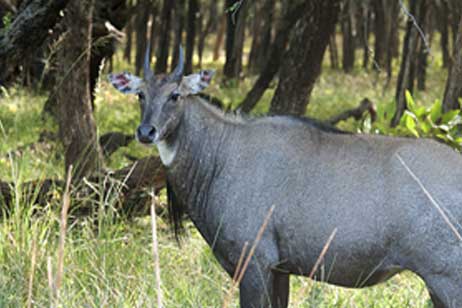
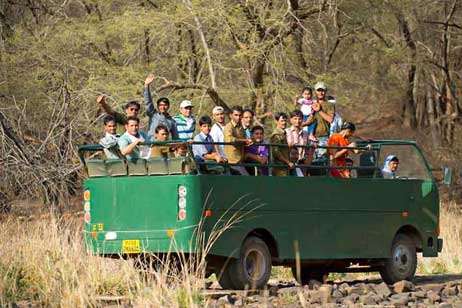
Therefore, other than the majestic tiger due to which this region is mostly toured for, watching the beauty and vigor of other animals also are equally enjoyable. Whether its elegance and liveliness of deer or sight of huge crocodile relaxing beside the lake or beautiful bluebull roaming around in the grass field, all these scenes will fill your mind and heart with delight. The plenty of exceptional bird species, which are found here, are the paradise for the bird watcher. The kaleidoscopic waterfowl around the lake or a magnificent Indian eagle soaring in the sky, or vulture perched high on the tree are very enchanting views for birding. There are almost 300 species of resident and migrated birds found in the Ranthambore forest. Few of them are Kingfisher, Painted Spurfowl, Sarus Crane, large Cormorant, Bronzed winged Jacana, Sandpiper, Nightjar, Great horned owl, Painted Sandgrouse and many others.
Flora in the Ranthambore Reserve Forest:
The captivating natural surroundings of the forest of Ranthambore and the tranquility here are profoundly relaxing and the delight for the mind. The blend of the dense green region and the sparse shrubbery in the desert region makes this land a unique site for nature lovers. It is estimated that there are nearly 300 species of vegetation found in and around the Ranthambore reserve forest. The area in the proximity of the Thar Desert gets very scant rainfall so the plant life here consists mainly of dry deciduous type.
The most dominant plant of all the plant species of the Ranthambore National Park is the 'Dhok', also known as the biological name of Anogeissus pendula. This tropical tree constitutes of more than three-fourth of the vegetation of this national forest. This tree has the height of up to 15 meters and its shrubs and fruits constitute major foods for the animals such as Deer, Antelope and Nilgai. The Dhok tree can also grow in the shallow soil but with limited growth and small in height.
Apart from the Dhok tree, the other prime trees of this park are Banyan (Ficus bengalensis), Pipal (Ficus religiosa) and Neem (Azadirachta indiaca). These trees have religious as well as medicinal values. The fruit trees which are prominently found in the Ranthambore are the Mango(Magnifera indica), Tamarind (Tamarindicus indica) also known as Imli, Jamun (Syzygium cumini) also known as the Indian blackberry and Ber (Zizyphus mauritania). The Chhila (Butea monosperma), also known as the flame of the forest due to its bright orange color, enhance the beauty of the landscape here and offers fabulous scene for nature lovers.
Apart from these prominent trees, few other flora which are found in the park are the Babul (Accasia nilotica), Gum (Sterculia urens), Gurjan (Lannea coromandelica), Kadam (Authocephalus cadamba), Khair (Accacia catechu), Khajur (Phoenix sylvestris), Kakera (Flacourtia indica), Karel (Capparis decidua), Khimi (Manilkara hexandra), Kikar (Acacia nilotica), Mahua (Madhuca indica), Salar (Boswellia serrata), Kulu (Sterculia urens), Ronj (Acacia leucophloea), Tendu (Diospyrous melanoxylon) and others. Lotus and water lilies are the prime aquatic flowers found in the lakes of Ranthambore National Park and the edges of the lakes are draped with Khus grass.
The Ranthambore national park is located at the edge of a plateau between the Banas River and the Chambal River and encompasses many perennial lakes, narrow valley, slender river streams and steep hills. It is a dense tropical dry forest with raw bushland and grassy meadowland.
A tour to Ranthambore national park will offer you the unmatched experience in totality with the rich variety of flora and fauna found here. With its diurnal tigers, the Ranthambore Park is the most famous tiger reserve in India among the tiger lovers.