One of the most celebrated tiger reserve forests in India, The Ranthambore national park is situated in the Sawai Madhopur district of Rajasthan state in India. The park is well connected through the rail and road with the all major cities of India. Jaipur, the capital of Rajasthan, is around 160 km from the park and is also the nearest airport. Reaching at the Ranthambore Park is easy for tourists from any corner of the world. Here is detailed information on how to reach the Ranthambore National Park-
The Ranthambore National Park is among the largest parks in the North India, located in the historic place of Sawai Madhopur in the Rajasthan, a northern state of India. Enriched with the numerous wild flora and fauna along with many endangered wildlife species, the Ranthambore offers you the amazing wildlife viewing experience with the Jungle safari organized to explore the insides of the forest. Also, the gigantic Ranthambore Fort that situated inside the park adds the heritage value into the forest.
The landscape of the forest is bestowed with the amazing natural beauty with its vividly varying topography which mesmerizes you with its raw attraction. The deciduous forest landscape includes lush shrubby vegetation, arid lands, greenery, grasslands, ravines, valleys, hilly terrain, river channels, lakes and water holes. Such a diverse topography and a typical rawness of the forest of Ranthambore make it an ultimate destination for photography and video shooting. For adding the charm, there are various historical architectural ruins, Palace, Fort and ancient temples located inside the park.
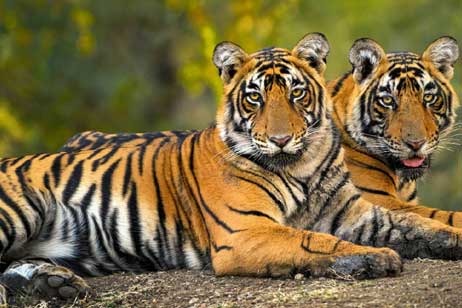
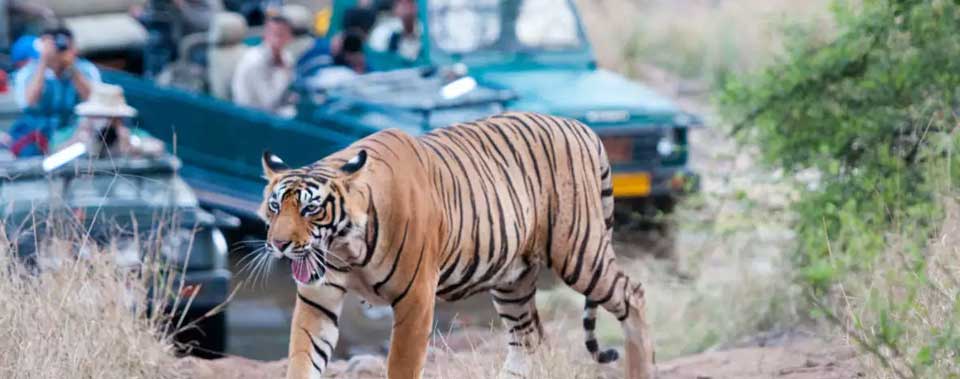
Most of the wildlife tourists who visit Ranthambore have the sole intention to get the sight of the Royal Bengal Tiger and nothing else. But apart from getting the sighting of the majestic Tiger in its natural habitat, there are many other things to view inside the forest. There are various wildlife species of flora and fauna which are rarely found outside the Ranthambore forest can also be an ultimate addition to the wildlife experience. The Ranthambore is the home to around 300 species of plants, 40 species of animals, 35 reptile species and more than 300 species of domestic and exotic migratory birds.
However, the tiger sighting is the foremost desire of most of the wildlife tourists in Ranthambore so every tourist wants to know the right answer to the question 'which is the best zone for tiger sighting in Ranthambore National Park'. Here, you will know the detailed information about the best zone for tiger spotting and how you can enhance the chances of tiger sighting. Presently, the Ranthambore Tiger Reserve is divided into the 10 ecotourism zones to manage the tourist activities in a better way. The Jungle safari is allowed in all the zones and the zones are allotted to the safari vehicles randomly.
Details about the Safari Zones :
The Ranthambore National park is divided into the 10 safari zones for the easy management of the tourism activity in the park as well as to make sure the safari is distributed evenly throughout the Jungle and not just get accumulated in few tiger prone area disturbing the habitats of the Jungle. The zones are allotted to the safari at the time of entrance by the forest officials. You cannot choose your desired zone as the zone allotment is done randomly by the computer just before the entry and no any external interference can be made in this process. Both the vehicles, the jeep and the canter, travel on the same route so offering entirely the same prospects of wildlife sighting. All the zones have its own specific beauty of wildlife and landscape in the buffer and core area. Every safari will take you to the core area of the respective zone and the prospects of sighting a tiger are more and less same in every zone. The safari vehicles are not allowed to change their allotted zone. However, the vehicles are allowed to roam anywhere on the network of routes in their allotted zone.
The Ranthambore National park is divided into the 10 safari zones for the easy management of the tourism activity in the park as well as to make sure the safari is distributed evenly throughout the Jungle and not just get accumulated in few tiger prone area disturbing the habitats of the Jungle. The zones are allotted to the safari at the time of entrance by the forest officials. You cannot choose your desired zone as the zone allotment is done randomly by the computer just before the entry and no any external interference can be made in this process. Both the vehicles, the jeep and the canter, travel on the same route so offering entirely the same prospects of wildlife sighting. All the zones have its own specific beauty of wildlife and landscape in the buffer and core area. Every safari will take you to the core area of the respective zone and the prospects of sighting a tiger are more and less same in every zone. The safari vehicles are not allowed to change their allotted zone. However, the vehicles are allowed to roam anywhere on the network of routes in their allotted zone.
Zone 01 : This zone is the territory of few of the most famous tigers of Ranthambore reserve forest such as Sultan(T-72), Noor (T-39) and Ustad (T-24). The Singh Dwar is the entry and exit gate for this zone, which is popular among the tourists due to better chances of spotting a tiger in this zone. In this zone, Tuti ka Nalla, Sultanpur, Gada Dub, Amreshwar Dang and Peela Pani are the places where there are higher chances of viewing big cats.
Zone 02 : With the increased sighting of tigers in this zone, it is considered best zone for tourists. Due to the many water holes found in this zone, the chances of tiger viewing are higher around the places such as Jogi Mahal, Nal Ghati, Phuta Kot, Phuta Bandha, Jhalra and Lahpur Tiraha. The zone is home to famous tigers like Ustad (T-24), Noor (Y-39), Sultan (T-72), Jhumru (T-20), Krishna (T-19) and others. Also, the leopards are also seen by tourists in this zone.
Zone 03 : Padam Talab, one of the famous lakes in Ranthambore national park is located in this zone, making it one of the prime zones to get a sight of a tiger. This zone is the home to star tigers like Sitara (T-28), Krishna (T-19) and their cubs. Some of the main locations of this park where there are higher chances of tiger sighting are Padam Talab, Jogi Mahal, Raj Bagh ruins, High Point and Mandook.
Zone 04 : Home to the legendary tigress Machli, the zone 4 of the Ranthambore tiger reserve was the most preferred zone before the death of tigress Machli. However, it still is the highly preferred zone due to the presence of a few of the star tigers of Ranthambore such as T-19, T-25, T-28, T-41, T-64 and T-75. Malik Talab, Singh Dwar, Lakkad Da, Lambi, Adidaant, Tamakhan are among the few places in this zone where maximum tiger sighting is reported.
Zone 05 : The star attraction of this zone is the sighting of tigers like T-17, T-25, T-28, T-74 and T-75. However, the entry gate to the zone 5 and zone 4 is same with the few common places to get the sight of a tiger. Singh Dwar, Kachida valley, Anatpur, Jokha,baghda and Dhakda are points where one can spot a tiger.
(From the zone 6 to zone 10 are included in the tiger reserve territory much later, so the entry gates of these zones are located far from the entry gates of zones 1-5, on the opposite side of the park. In order to reach there, the safari jeeps or canters have to go through the old city of Sawai Madhopur.)
Zone 06 : There are chances of spotting Noor (T-39) with her cubs as she frequently roams in this zone and spotted by the tourists. Other tigers which are seen in this zone sometimes are T-8, T-34 and T-57. The zone 6 is adjacent to the zone 1 but the entry gates are opposite to each other. The landscape of this zone consists of large open grassland with the hills in the background. One can also spot the rare species of birds in this zone, which includes endangered Red Headed Vultures. Few points where the chances of spotting the tigers are high are Palli Darwaza, Kala Pani, Patwa Ki Baori, Soleshwar, Khabli and Saran Ka Pattha.
Zone 07 : It is considered as the territory of T-8 and T-34 as they are spotted in this zone few times. However, this zone has fewer places than other zones where one can spot a tiger, but other animals also are spotted easily in this zone. Places such as Chidikho, Kushalipura, Jamoda and Rajbagh Naka in the zone have higher chances of spotting the majestic predator, the tiger.
Zone 08 : The topography of Zone 8 is almost same as the zone 8 and even the tigers which are spotted here are the same T-8 and T-34. The places where tiger visibility is higher are Balas, Kali Bhat, Neemli Dang, Mahakho and Kherai.
Zone 09 : Located on the bank of the Chakal River, it takes around the 45 minutes of drive to reach the zone 9 from the Tiger reserve. Considered as the territory of T-42 and T-59, this small conservancy is also known for the home to Sloth bears, Caracals and few aquatic birds.
Zone 10 : The zone 10 has recently been included in the safari route with the natural landscape consists of hilly tracks, deciduous forest and few scenic water bodies. The zone is known for the sighting of tigers like T-43, T-13 and her cubs. Sometimes, the T-42 (Fateh) is also seen in this zone by the tourists. Few good tiger spotting places in this zone are Kushalipura, Halonda, Bodal, Aantri, Banskhori and Devpura.
The most dominant plant of all the plant species of the Ranthambore National Park is the 'Dhok', also known as the biological name of Anogeissus pendula. This tropical tree constitutes of more than three-fourth of the vegetation of this national forest. This tree has the height of up to 15 meters and its shrubs and fruits constitute major foods for the animals such as Deer, Antelope and Nilgai. The Dhok tree can also grow in the shallow soil but with limited growth and small in height.
All the 10 zones are the raw forest and have its own share of beautiful landscape and enriched with the wildlife. All the zones are tiger territories of the various tigers. The tiger density in Ranthambore is very high and the area of forest is not enough to accommodate the increasing tiger population of Ranthambore. There is a demand for increasing the forest area of Ranthambore and also the demand for creating wildlife corridors between forests and parks. So, it is absolutely wrong to say that any zone has no tiger or less tiger.
There are enough tigers in every zone, but what makes one a good zone is the chances of spotting them. The safari zone, which has the good number of the water bodies, offers the more possibilities to spot a tiger than the arid lands. Also, the zone which has higher prey density also has the better tiger spotting possibilities. So, the zones from 2 to 5 are considered as the best zones for tiger spotting. As the previous records say, the tourists have spotted more tigers in these zones than the other zones. These zones offer slightly better possibilities of tiger spotting it doesn't mean other zones have absolutely no chances of the tiger spotting.
The tourism zone no 3 and 4 has many lakes and has the beautiful lush green landscape making it the best zone for nature lovers and wildlife lovers as well. The lakes and its surroundings are the best places to spot a tiger. The zone 3 has the three most famous lakes of the Ranthambore which are Padam Talao, Rajbagh Talao and Malik Talao. The famous world heritage site, the Ranthambore Fort, is located nearby this zone and enhances the captivating beauty of this zone. The water bodies in any zone are the best place to spot a tiger, especially, in the summer season. There is a maximum possibility of spotting a tiger near water holes during a hot day.
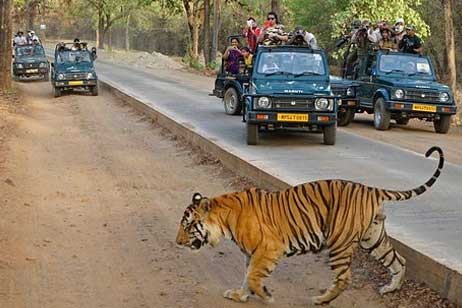
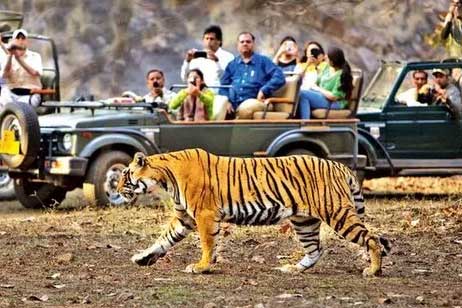
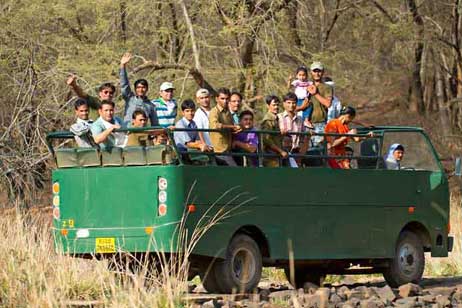
The Jeep Safari is allowed in all the zones with the limited number of vehicles in each zone while Canter safari is not allowed in the 7, 8 and 10 zones due to hilly track and steep turns and climbs. Four Jeep Safaris and four Canter Safaris are allowed in each zone to maintain the equal tourists flow in every zone. The safari track in every zone is same for the Jeep and Canter both. The different areas of all the zones have been marked as its territory by various Tigers and they rule their territory. The Tigers are spotted in their territory while resting, following its prey, walking or cooling in the water bodies in the summer or basking in the sun in winter.
However, the zone is allotted randomly to the safari vehicles by a computer program to ensure the fair practice. Any vehicle cannot get the favorable zone by altering the allotment and once the zone is allotted, they have to stick to their zone for the allowed safari time period. But, one can make a request for the change of the safari zone by paying the required extra fee to the forest office at the time of the entry. The change of zone is subject to availability in the zone and fully depends on the forest officials to accept your request or not.
At last, I repeat once again that there is no such thing as the best zone for tiger sighting or bad zone for tiger sighting in Ranthambore. All the zones offer you the equal opportunity to explore the forest and tiger sighting. Though some zone is known for better tiger sighting experience, the tiger sighting is a matter of luck. So, one may not get the sight of the tiger even in the better zone and one can easily spot a tiger in another zone.