This is not an official website of Ranthambore Tiger Reserve. This is a registered private travel agency( GTI Travels Pvt. Ltd.) which organizes hotel, safari and tour package bookings in Ranthambore National Park.
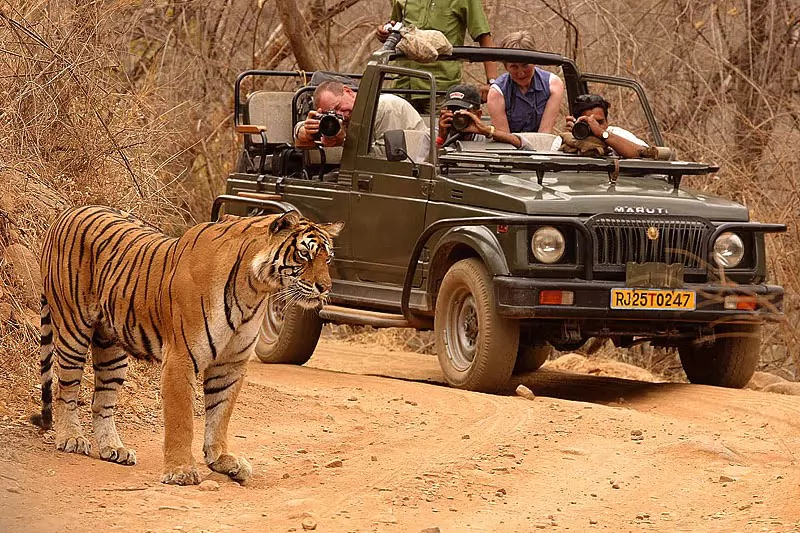
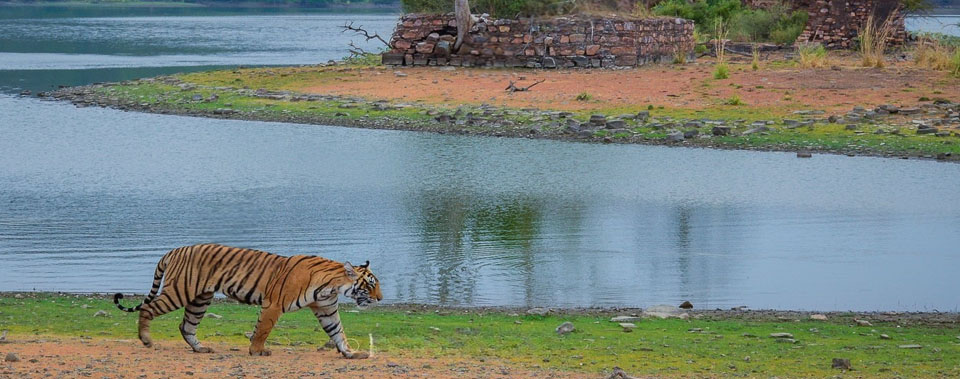
Tucked away in the rugged terrain of Rajasthan, Ranthambore National Park has long held its place as one of India's most treasured wildlife destinations. Formerly a royal hunting ground and a rare blend of historical delight - ancient fort ruins, lakes, and dense dry forests that have sheltered wildlife for centuries. Over the years, Ranthambore has evolved from a protected reserve into a landmark on the global wildlife tourism map, drawing nature lovers, photographers, and curious tourists from every corner of the world.
And while the national park commands attention throughout the year, summer tells a different story altogether. As the heat settles over Rajasthan and the forest thins out, something remarkable happens - the wilderness opens up. Animals move more freely, water bodies become natural gathering points, and the odds of witnessing raw, unfiltered wildlife moments go up considerably.
What makes this park genuinely different from many others across the country is its landscape. The dry, open terrain and rocky outcrops gives tigers far less reason to stay hidden. Unlike the other national parks where dense canopy shrouds everything whole, here you stand a real chance of watching a tiger walk a ridge line, crouch near a lake at midday, or simply own the trail ahead of your vehicle.
Some travel moments earn their place in conversation for years, and Ranthambore National Park recently produced one of those. A rare overlap of a tiger, a leopard, and a cheetah within the same zone and time window was reported inside the reserve, sending genuine excitement through wildlife and travel communities across the country. What made it even more extraordinary was the belief that the cheetah had likely wandered in from Kuno National Park. For anyone who follows Indian wildlife seriously, Ranthambore right now feels like the place to be.
While tigers draw the headlines, Ranthambore's leopards have been earning quiet respect among those who know what they are looking at. These are masters of invisibility - animals that can press themselves into a rocky hillside or vanish into scrub in a matter of seconds. In most forests across India, a leopard sighting is the highlight of an entire trip. At Ranthambore, there exists the genuine possibility of seeing both a tiger and a leopard within a single safari, sometimes within the same zone. For wildlife photographers especially, that combination is nearly impossible to walk away from.
Ranthambore carries a visual weight that most wildlife destinations simply cannot match. The ruins of a UNESCO-listed fort rise above the tree line, ancient stone gateways frame forest paths, and centuries-old banyan trees spread their roots across ground that has seen empires come and go. The lakes reflect the sky at dawn and draw in herons, crocodiles, and deer by afternoon. It is the kind of place where a wildlife photograph can also be a landscape photograph - where the setting adds as much drama as the subject. Whether it is a sambar standing at the edge of Padam Lake or a tiger resting in the shadow of a crumbling wall, the imagery here has a depth and texture that stays with you long after the drive ends.
Rajasthan in summer is not for everyone, and that is exactly why it works so well for those willing to make the trip. As temperatures climb and water grows scarce, wildlife activity concentrates around the national park's lakes and waterholes in ways that simply do not happen during cooler months. The vegetation has thinned, sightlines stretch farther, and the animals that do appear tend to linger longer near water sources. Early-morning and late-evening game drives in summer carry a particular quality of light and stillness that regular visitors often describe as among their most memorable experiences.
