This is not an official website of Ranthambore Tiger Reserve. This is a registered private travel agency( GTI Travels Pvt. Ltd.) which organizes hotel, safari and tour package bookings in Ranthambore National Park.

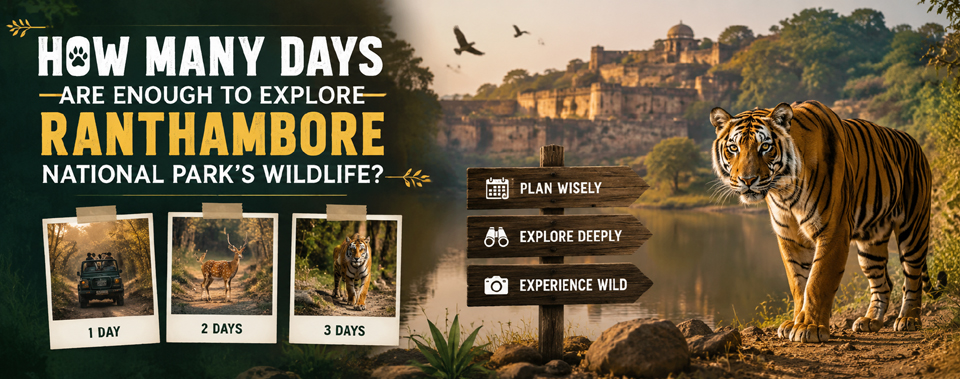
Ranthambore National Park is India’s one of the iconic tiger destinations, located in Rajasthan. A wildlife tour in this national park is undoubtedly a thrilling experience. Unlike the conventional tourist places, a tour to celebrated wildlife destinations like Ranthambore, you need to conduct through planning for the best experience. The wildlife safaris are closely regulated and monitored by the forest department and you need to be particular with the safari timings allotted to you. While planning a wildlife trip to Ranthambore, you might find yourself wondering: for how many days you should plan the wildlife tour.
Ranthambore is one of India’s most famous tiger reserves, and your trip duration plays a big role in what you get to see and experience. From thrilling safaris to enchanting forest landscapes, the right number of days can make your journey memorable instead of rushed.
For most visitors, spending 2 to 3 days in Ranthambore is considered the perfect duration. This gives you enough time to explore different safari zones and increases your chances of spotting wildlife, especially tigers.
A well-planned Ranthambore wildlife tour itinerary usually includes at least 3 to 4 safaris. This gives you a wholesome experience. Since wildlife sightings are unpredictable, more safaris mean better chances of spotting wildlife. Instead of rushing through a single day, staying longer allows you to enjoy the jungle at a relaxed pace. You also get time to understand animal behaviour, the forest, track movements, and experience the thrill of being in the wild without feeling hurried.
Your trip duration also depends on a few important factors. Understanding these will help you decide how to plan Ranthambore wildlife trips more effectively. Please remember that the prior booking of the safari is the most important factor that leads to a wholesome experience at Ranthambore.
→ First, safari zones matter a lot. Ranthambore has multiple zones, and not all zones offer the same chances of sightings. If you plan to explore different zones, you will need extra days to secure bookings and enjoy varied experiences.
→ Second, the season plays a key role. During summer, animals frequently visit water sources, making sightings easier. In winter, the weather is pleasant, but wildlife movement can be slightly lower. So, your stay may need adjustment based on the time of your visit.
→ Travel time is another factor. Since Ranthambore is located near Sawai Madhopur, reaching there can take several hours depending on your starting point. It’s always better to include buffer time in your plan. While you are there, you can also explore the historic Ranthambore Fort, which offers stunning views and adds a cultural touch to your trip.
⠂ 1-day trip - If you are short on time, a 1-day trip can include one or two safaris. However, this option is quite rushed and may limit your chances of spotting tigers.
⠂ 2-day trip - A 2-day trip is more balanced. You can enjoy 2–3 safaris, giving you a fair opportunity to explore the forest. This duration is ideal for travellers who want a quick yet meaningful wildlife experience.
⠂ 3-day trip - For the best experience, a 3-day trip is highly recommended. It allows you to go on multiple safaris, explore different zones, and relax in between. You can also enjoy your resort stay, local sightseeing, and nature walks.
To make the most of your trip, always book safaris in advance, choose different zones if possible, and follow your guide’s instructions during safaris. Patience is key in wildlife tourism. The more time you spend in the jungle, the higher your chances of witnessing unforgettable moments.
