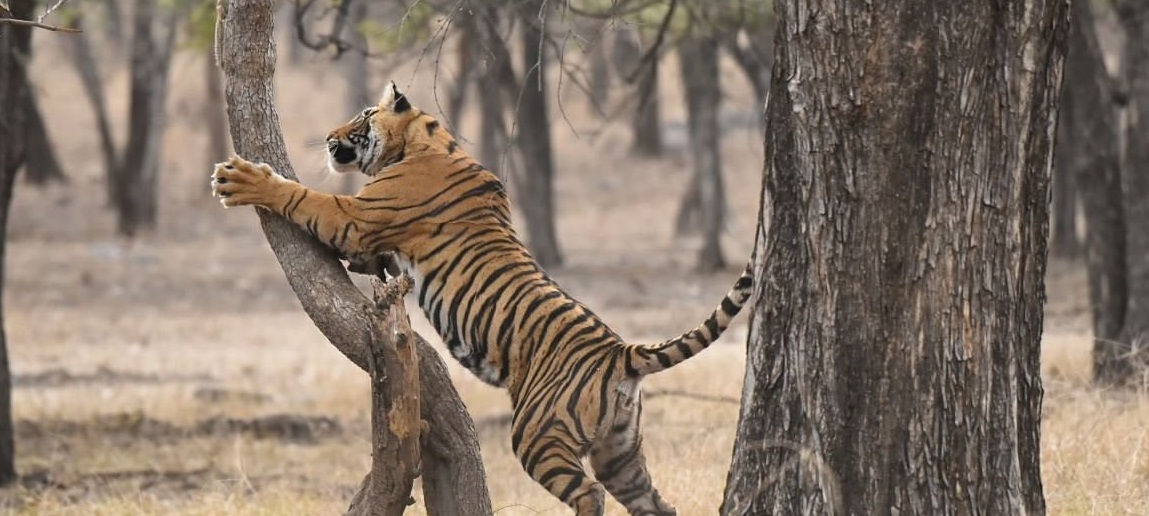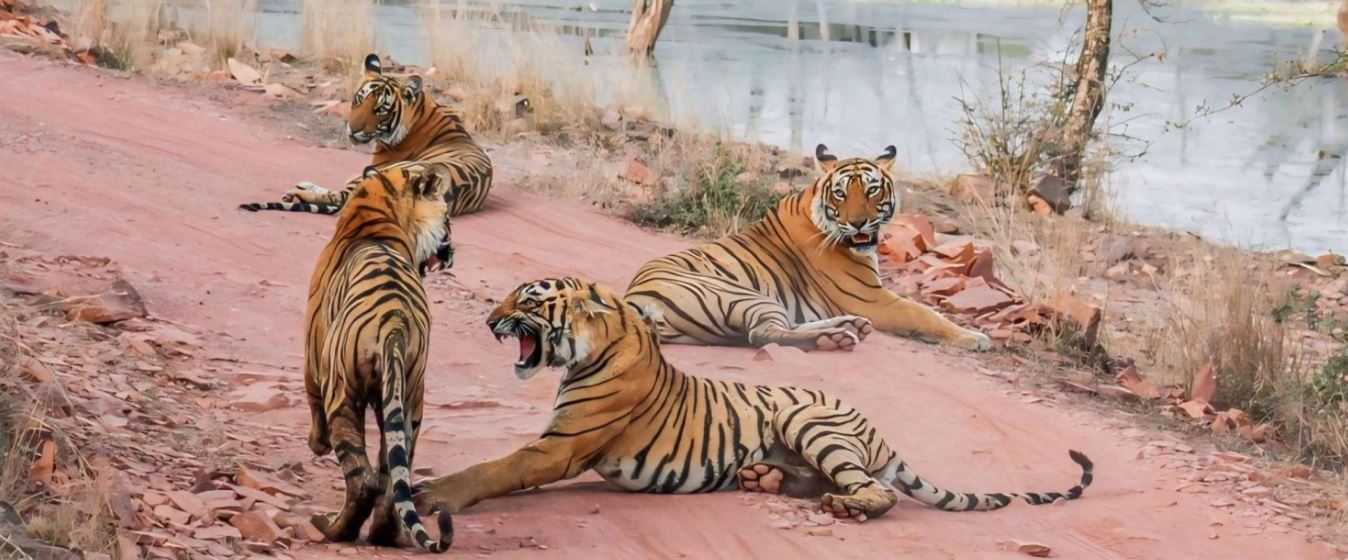
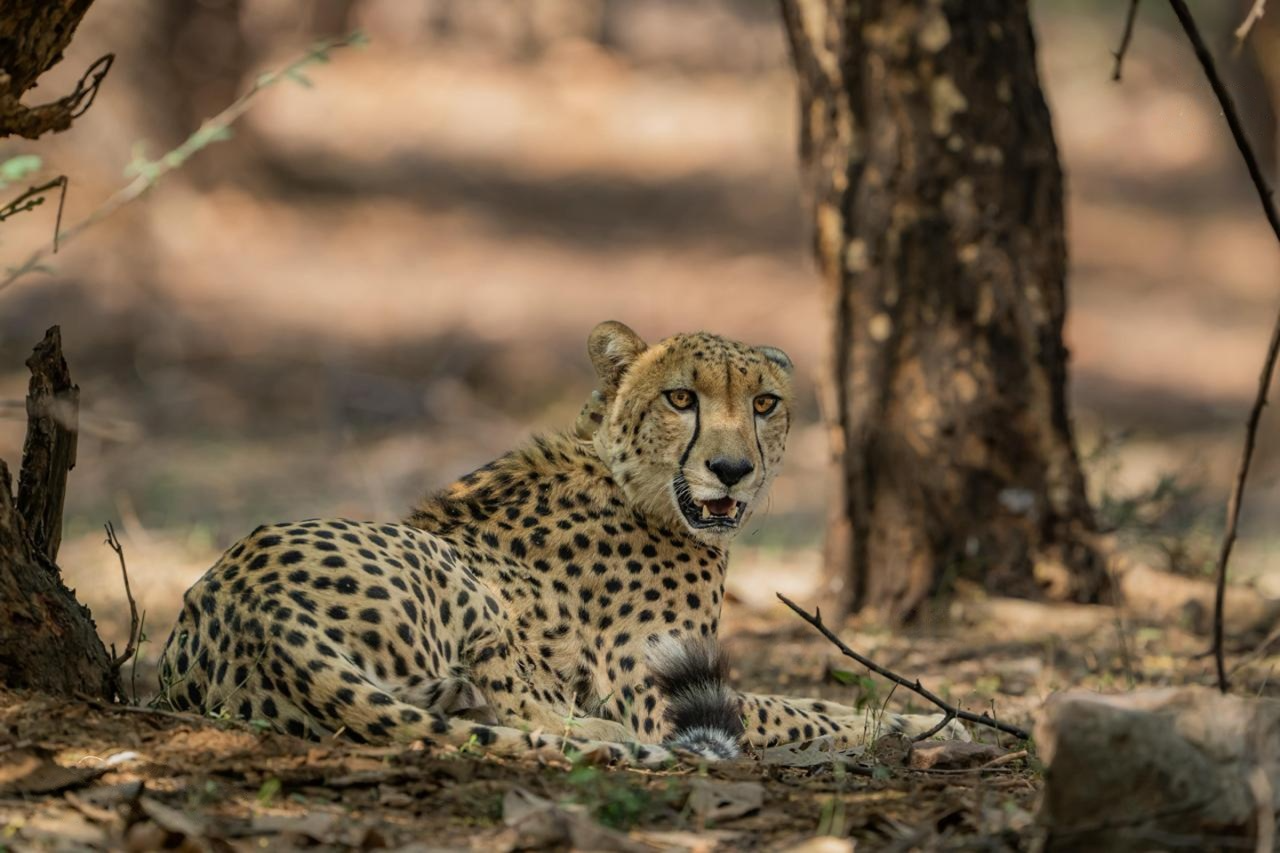

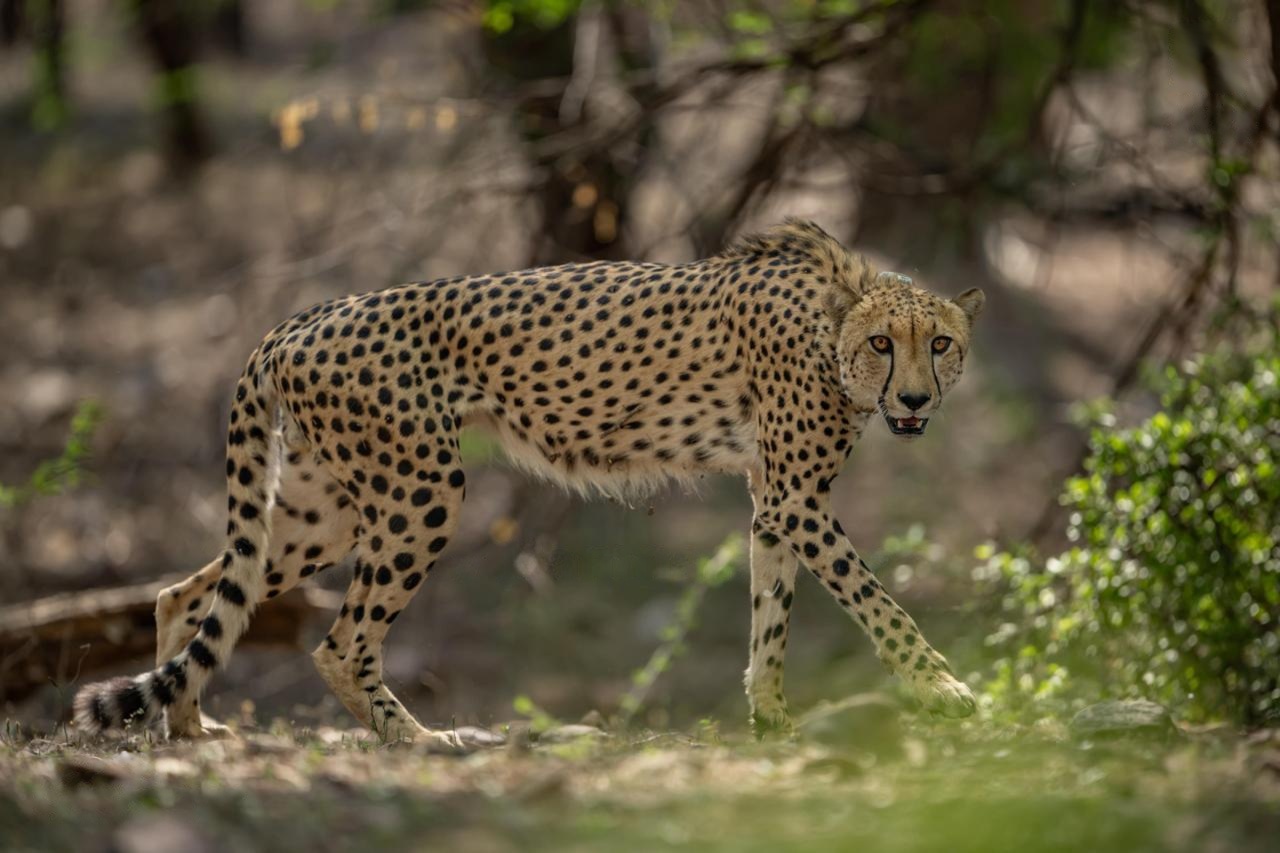
A rare wildlife movement has caught the attention of forest officials and tourists alike. A young male cheetah from Kuno National Park in Madhya Pradesh has recently been spotted inside Ranthambore Tiger Reserve in Rajasthan. The animal was seen roaming in Zone 9, a popular tourist area known for sightings of tigers and leopards. This unusual presence has created excitement among visitors and wildlife enthusiasts.
A Remarkable Journey Across States
The cheetah, identified as KP-2, is an Indian-born cub of Asha, one of the translocated cheetahs in Kuno. Known for his wandering nature, KP-2 has covered long distances before. Earlier this year, he reportedly travelled more than 500 km, moving through districts like Baran and Kota before being brought back by forest teams.
This time, KP-2 has moved even further and entered deep into the tourism zone of Ranthambore. The distance from Kuno National Park to Ranthambore National Park is about 90 km. Ranthambore is a popular tiger destination due to their high density. According to officials, cheetahs from Kuno have strayed into the reserve in the past, but they have never ventured so far inside Ranthambore. His movement is being closely monitored by teams from both parks to ensure safety for wildlife as well as nearby villages.
Presence in Ranthambore National Park Raises Questions
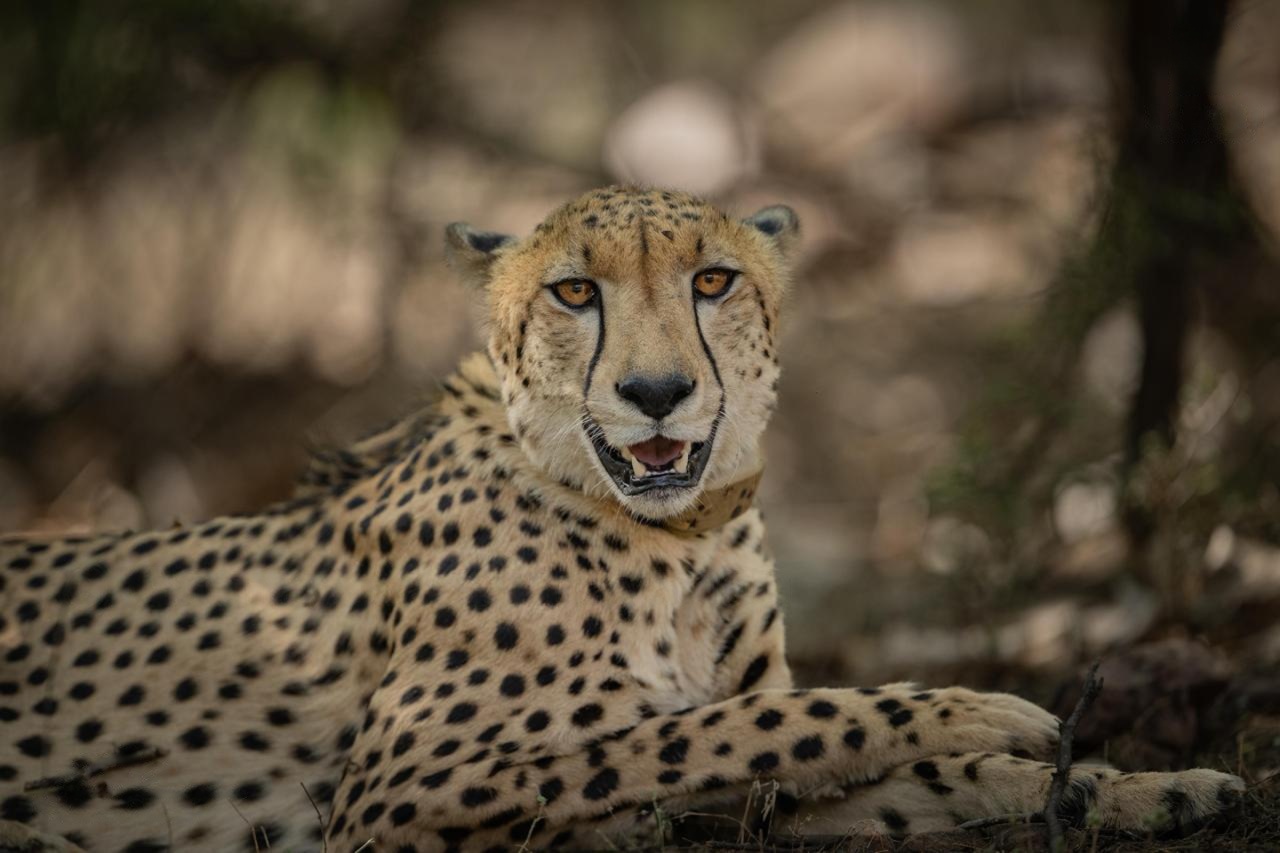
The presence of a cheetah in Ranthambore National Park is highly unusual. Globally, cheetahs and tigers do not share the same habitat. Tigers are native to Asia, while cheetahs are mostly found in Africa. In Ranthambore, where apex predators like tigers and leopards dominate, a cheetah may face significant risks. Studies suggest that tigers tend to eliminate competing carnivores, which makes the situation delicate.
So far, KP-2 has not made any kills in the area. Officials are observing his behaviour before deciding whether to tranquilise and relocate him back to Kuno. The situation highlights the challenges of wildlife conservation and animal movement across landscapes. For now, the sighting has turned into a unique moment where visitors might witness three big cats in one reserve, something rarely seen anywhere in the world.