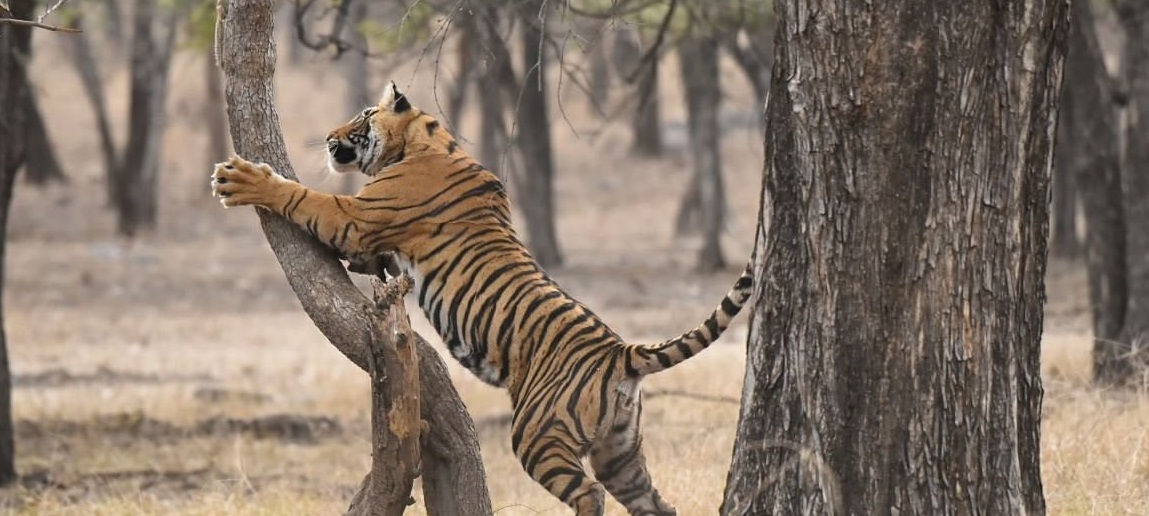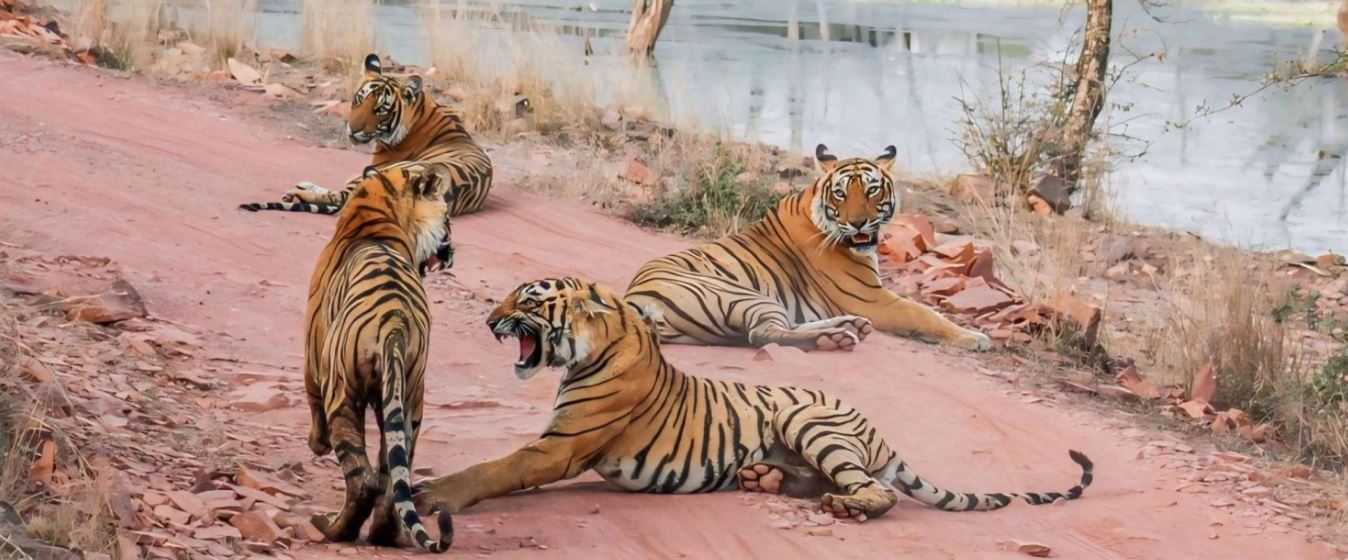
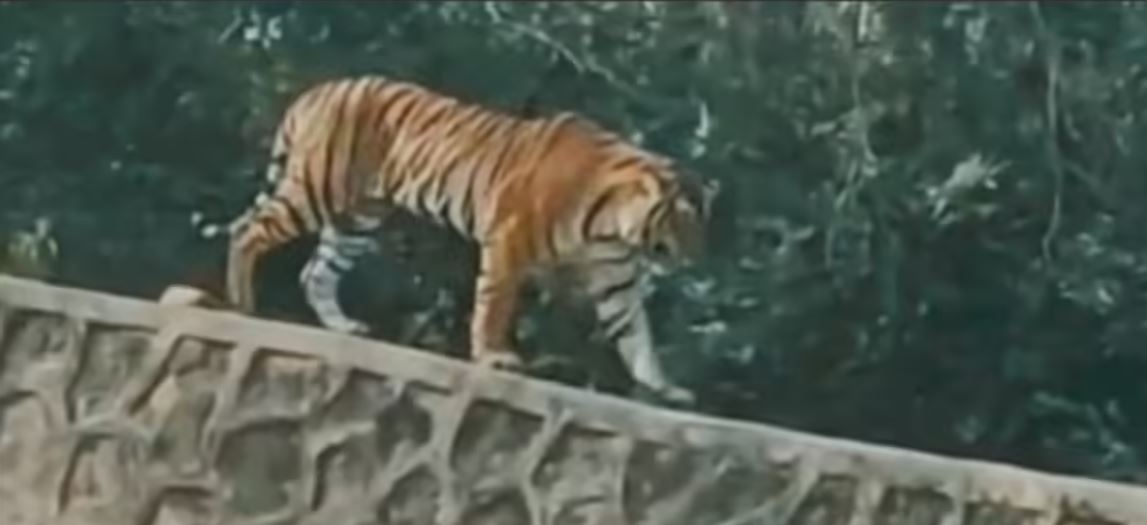

Ranthambore National Park continues to surprise visitors with unforgettable wildlife moments. Recently, the national park witnessed a rare and delightful sighting that quickly captured public attention. On January 8, 2026, a tiger cub was seen calmly walking into the parking area near the historic Ranthambore Fort in Rajasthan. The cub is one of the offspring of tigress Riddhi, also known as T-124. She is a well-known resident of the reserve and is often seen with her cubs around tourist-friendly zones. This time, her young cub wandered close to the fort area, creating a memorable moment for tourists present there. Visitors seated inside safari jeeps watched the cub move confidently along the boundary wall near the fort. The young tiger appeared calm and unbothered by nearby vehicles. At one point, a safari driver gently reversed the jeep to maintain a safe distance. Tourists followed park rules and filmed the moment from inside their vehicles.
The video of this sighting was shared on social media and soon went viral. The post reminded viewers why the park holds a special place among wildlife lovers. This sighting occurred near Zone 3, one of the most popular safari zones in the park. The area is known for its ancient structures and frequent tiger movement. Similar moments involving Ridhhi and her cubs have been recorded earlier as well. Past videos show her cubs playing near water bodies and resting close to safari tracks.
Ranthambore National Park is famous for its unique landscape. Tigers roam freely among centuries-old fort walls, temples, and lakes. The national park covers around 392 sq. km and is home to over 70 tigers. Many of them belong to legendary bloodlines, including that of Machli, one of India’s most iconic tigresses. While such sightings bring joy to tourists and photographers, forest officials continue to stress the importance of responsible tourism. Visitors are advised to stay inside their vehicles, avoid noise, and keep a safe distance from wildlife. These rules help protect both animals and people. Moments like a tiger cub near the Ranthambore Fort turn a simple safari into a lifelong memory. They also remind us of the delicate balance between conservation, tourism, and heritage that Ranthambore represents.
What Tourists Should Take Care Of?
The recent sighting of tigress Riddhi’s cub near the Ranthambore Fort boundary highlights how close wildlife movement can be to tourist zones. Such moments are exciting, but they also remind visitors of their responsibility during a safari. Ranthambore National Park is a sensitive ecosystem where tourism and conservation must go hand in hand.
One of the most important things tourists should plan in advance is Ranthambore online safari booking. During peak seasons, especially from October to March, safari permits sell out quickly due to high demand. Advance online booking ensures confirmed entry, preferred safari zones, and proper vehicle allocation. It also helps forest authorities manage visitor flow and reduce crowding in sensitive areas. Last-minute bookings often lead to disappointment or reliance on unauthorised agents, which should be strictly avoided.
When inside the park, tourists must follow safety and ethical guidelines at all times. Close sightings, like that of a tiger cub near the fort, can happen unexpectedly. Calm and disciplined behaviour helps prevent stress in animals and ensures visitor safety.
Key safety measures to follow during a Ranthambore wildlife safari:
- Always remain seated inside the safari vehicle. Never attempt to step out, even for photography.
- Maintain silence during sightings. Loud noises can disturb wildlife and alter animal behaviour.
- Keep a safe distance from animals. Let the driver handle vehicle positioning responsibly.
- Do not feed animals or throw objects inside the forest area.
Follow instructions given by safari guides and forest officials without argument.